Do Not Start a Side Business
Before you build a side business, answer these questions and scroll to the bottom…
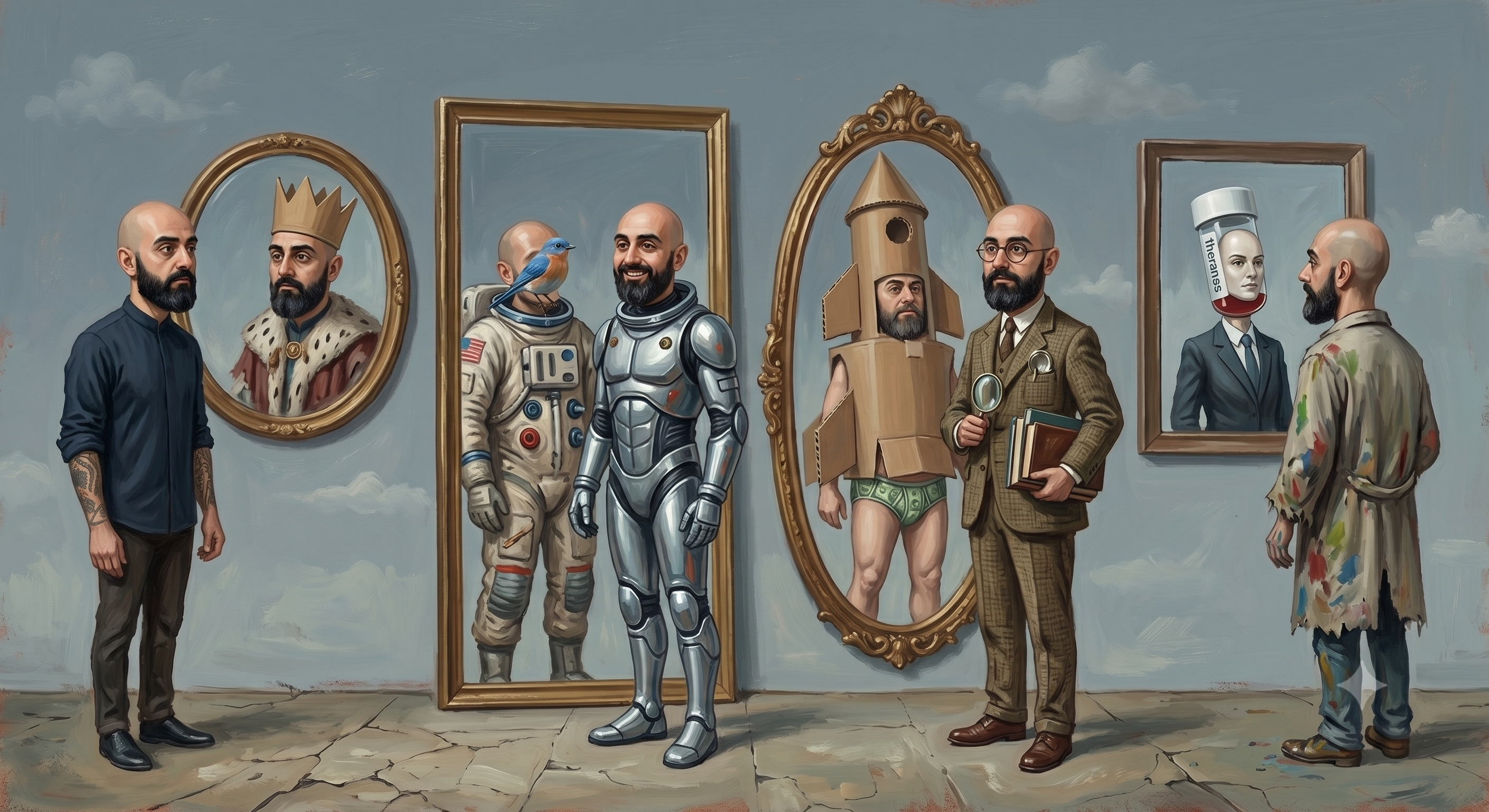
I have spent many years talking to thousands of people about their business, side hustles and app ideas. Everyone starts with a unique set of skills and specific perspective on how they're going to build their thing into the next big thing.
I've seen engineers start from code and ignore customers.
I've seen designers start from pencil drawings and forget about platform.
I've seen sales people start with a product and then try to retrofit it into a business or customer.
I've seen it all, folks, and over the years I've come to realise that at the very beginning, before you do anything else — before you sketch mockups, research competitors, fire up Replit and one-shot the entire app — you need to answer the following four questions with as much clarity, simplicity and focus as you can.
This is the first question that everyone ignores but is undoubtedly the most important:
What does success look like for this business?
Do you want this business to replace your full-time job?
Is this going to be passive income and if so, for what?
Does this business help you save for retirement?
Do you want to learn a new skill and this business is a good way to do that?
I don't care what your answer is to be honest. What matters is that you have a very clear and very specific answer.
You see what I'm getting at here, right? If you expect to be rich from your side business app idea then when you get to Question 2, you're going to have to be able to allocate a lot of your life to this business.
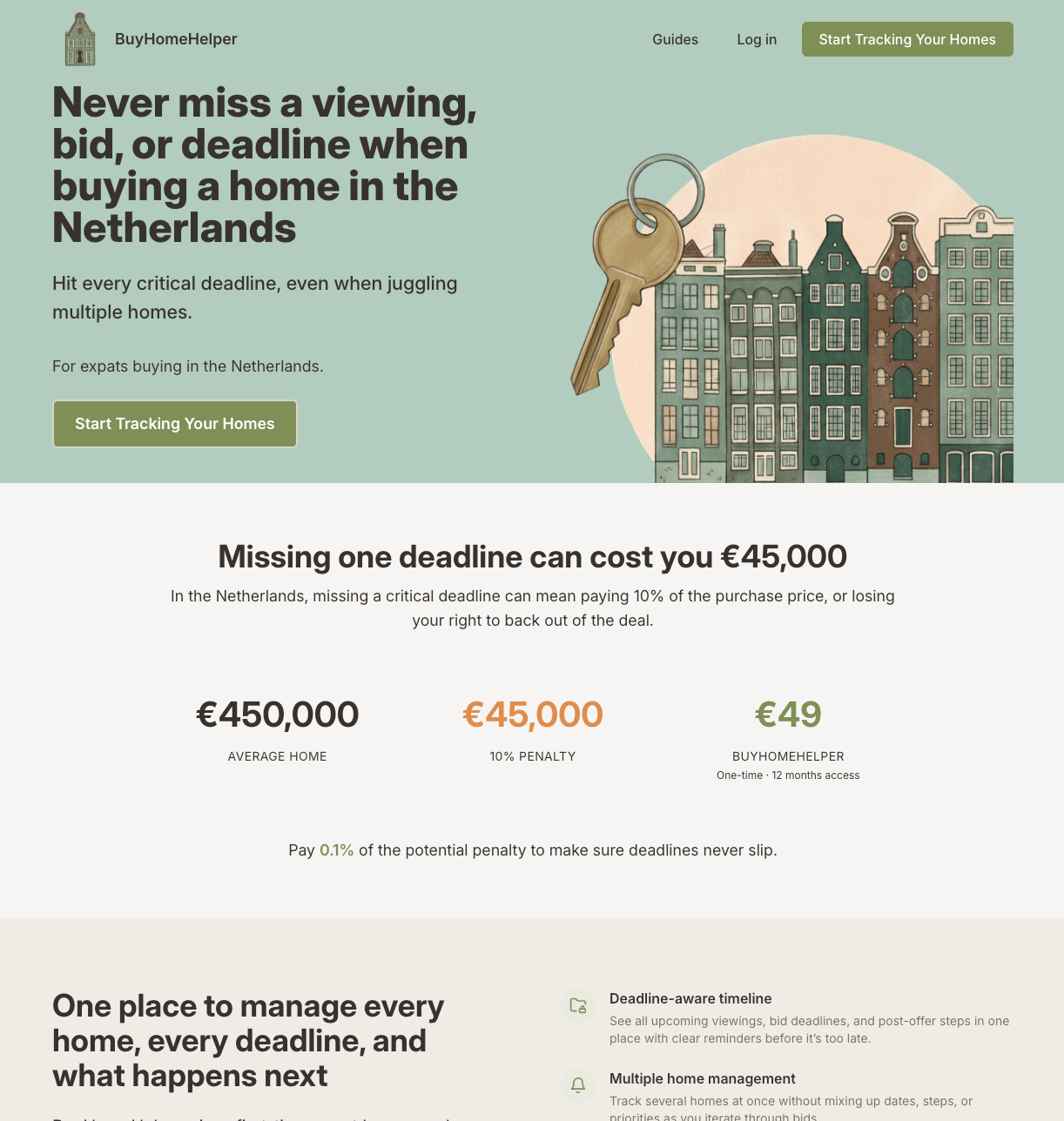
As an example, I've built BuyHomeHelper.com to help expats in the Netherlands track their home buying stages.
The goal for this business is that by the end of 2027 we're acquiring 1000 paying customers per year. That's it. That's what I'd consider a success but to be honest, if it gets even half way there I'll be happy!
Now the pressure is relative, not outsized. I know what I'm aiming for and when I should be irritated with myself. The guardrails are clear and the goals are clear and I can take this information with me into Question 2.
When someone has a business idea I can always sense the enthusiasm. Especially if it's the first business they're seriously considering. Usually the person is overcome with their idea that they forget about context or circumstance.
So Question 2 is all about assessing your context and circumstance: Exactly how much time can you allocate to this business every week?
You can't start a side business if you have no "side" to business within. So it's at this point that I like to review my life in great detail and I urge you to take a minute and do the same before you vibe a line of code, design a landing page, talk to a potential customer, raise funding or even bug your friends and family with the idea.
The review is detailed and covers every aspect of your life and how you spend your time. To state the bleeding obvious — you only have 24 hours in a day. Eight of them go to sleep which means you have 16 more hours to work with.
Here's where the accounting starts; review your week and write down every hour you spend on something. Hobbies, kids, sports, exercise, socialising, watching tv, reading books, etc.
Looking at my week: I don't have kids, I don't have pets, I exercise 5 times a week, I watch some tv every day, read my book every day. Overall I probably have about 8 hours spare per week for a new side business.
You might have 1 hour per week, or 25 if you include weekends and evenings. That's entirely up to you.
If we then look at my definition of success from Q1: 1000 paying customers by the end of 2027, it becomes totally reasonable to spend a few hours every week over a period of 18 months to figure out if this business can get close to 1000 paying customers.
But it's important to do the accounting because your enthusiasm likely outweighs your available time. When that happens and you ignore it you will feel like a failure and be filled with guilt constantly because you just aren't getting to your billion-dollar idea (go back to Q1 if you are trying to build a billion-dollar business with only 8 hours per week free).
When I have an idea for a new business I can see the problem so clearly in my mind. At least, that's what I think. But the second I start telling my partner about the idea I can see boredom, confusion or apathy take over her face. This is usually a sure sign that I'm not really solving a clear problem.
At this stage I don't really care if the problem is one I have or one I've observed or one that someone has told me they have. What I care about is that I don't start until I am solving one problem, not many.
So the question is: What problem are you solving, exactly?
Let's bring back BuyHomeHelper.com — It's a platform that helps expats track their home buying progress. That's it.
It's not: a platform that helps expats and locals track their home buying progress.
It's not: a platform that helps expats track their home buying and renting progress.
Nope. One thing.
If your answer includes "and" then you aren't there yet. Reduce more.
This is so important because it gets you closer to the user. The closer you can get to the user throughout the process, the more likely you are to know who the user is and how to sell to them when it counts.
Reduce and refine your problem statement until it's one clear problem end to end.
Similar to Question 3, this question is about ruthless focus but instead of the problem, we're now focusing on the customer or the user.
The question is simple; who, exactly, is the user/customer?
Just as above, if your answer includes "and" then your answer is wrong for this stage of the idea. Reduce.
First time founders generally think that wider is better because a wider target audience gives you more chance of finding a customer, more people = more customers. Unfortunately that logic is wrong for most businesses.
Initially you think that if you target women aged 25-40 in London you could find some customers. But think about a 25-year-old and a 40-year-old that you know. Do they dress alike? Do they use the same lexicon? Do they go to the same clubs? Eat the same foods? Drink the same alcohol and even listen to the same music? Absolutely not.
Niche. Niche. Niche.
Paul Graham, the founder of Y-Combinator, once wrote that to build something big you have to first build something small. So focus in on a specific user or Ideal Customer Profile (ICP) if we want to be all fancy about it.
Instead of the above "women aged 25-40 in London" let's try to be more specific:
Women in Soho, aged 30-35 who do Yoga in the morning and go to Gail's for coffee after.
Now that might be a much smaller cohort of potential customers but if your app is a yoga planning app for friends, then these are your people!
Remember, if you are targeting women and men or men aged 25-35 and aged 55-60 then your targeting is wrong and you need to focus.
Recap
It's easy to be excited by an idea and to dream about what you'll do with the recurring income every month. Literally everyone does that. Don't be like everyone.
Answer these four questions (email them to me if you need some accountability):
Q1: What does success look like for this business?
Q2: Exactly how much time can you allocate to this business every week?
Q3: What single problem are you solving?
Q4: Who, exactly, are you solving this problem for?
If you've made it this far, here's the video version of this article:
ANNOUNCING NO BULL SHIP
I've been (not-so-quietly) thinking about No Bull Ship for a few months now. I love helping people build their ideas so I'm launching No Bull Ship to do exactly that.
No bull. Just shipping.
It's an 8 week build sprint for people who have a clear idea and are ready to stop making excuses and start building.
In 8 weeks we'll focus on one problem for one user and build you one solution to take live and start validating with real users.
If you want to join the first sprint starting on 08 July then apply below. I'm only accepting 20 people into this first cohort, so really sell me your idea!